
Your brand.
A defined filtration product.
OEM / ODM filtration cooperation, from cartridge configuration to own-brand identification and packaging. Start with the product your customers need.
Discuss your projectA clear scope.
A shared specification.
A familiar cartridge with your label, a configuration for an existing housing, or a requirement that needs development. Each starts with a different brief.
Define what changes, what needs checking and who approves it. The product specification, sample plan and packaging requirements become the basis for the order.
Cooperation Options.
Choose the starting point closest to your project. The final scope is agreed around the product and its intended use.
A product range for your brand.
Start with a cartridge construction suited to your filtration duty. Define the product identity, agreed specification and packaging together, so the supplied item and your catalogue describe the same product.
Connect the product to your distribution.
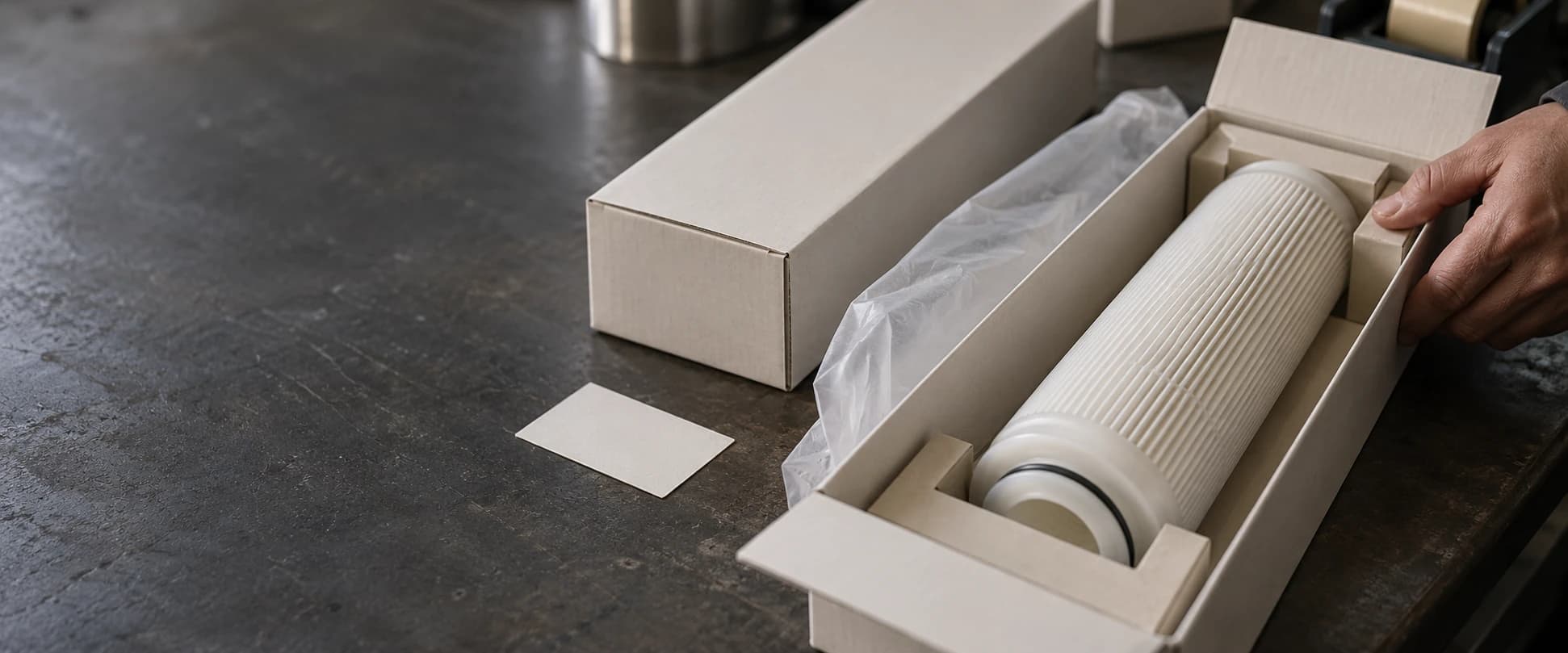
Discuss label artwork, product codes, individual protection and carton requirements. Review an artwork proof and packaging sample before applying an agreed format to an order.
Specify the element around its application.
Review media, filtration grade, dimensions, end connections and seals as one specification. An available option still needs to suit the liquid, operating conditions and installed housing.
Begin with a performance brief.
For a requirement beyond an established configuration, share the application, target performance and design constraints. Feasibility, development scope, sample work and validation responsibilities need review before committing to a new design.
Product, Identification & Packaging.
Three connected parts of the brief. Review the details that need to match before approving a sample.
The cartridge specification.
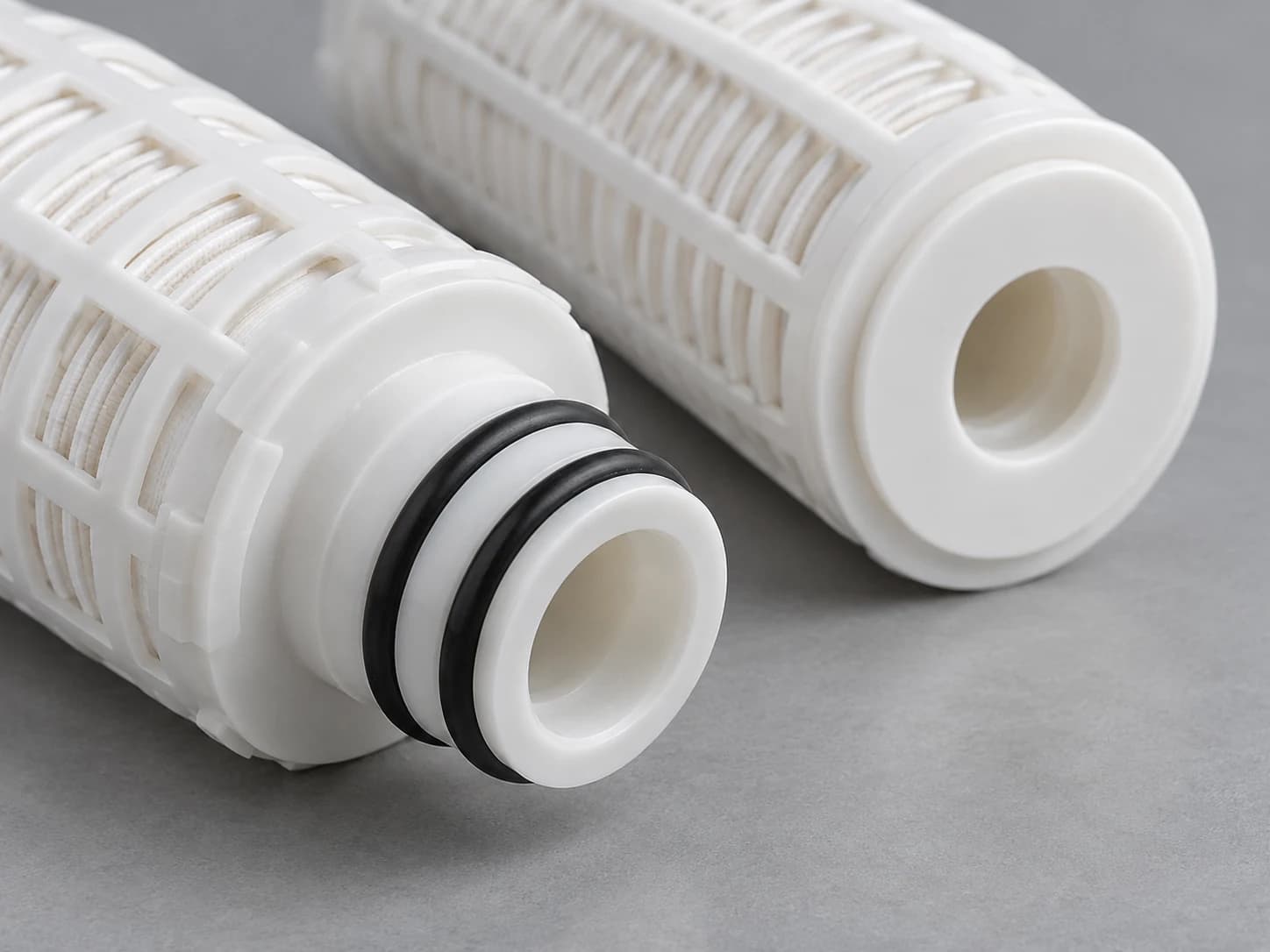
Treat the media, geometry and sealing arrangement as a complete product. A matching appearance alone does not establish equivalent filtration performance.
- Media & filtration grade
- Material, construction and the stated retention test basis.
- Dimensions & end format
- Actual length, diameters, connection and housing seat.
- Seals & exposure
- Seal compound, liquid chemistry and operating conditions.
A clear product identity.
Make the agreed product easy to order, recognise and trace. Keep the product code connected to a controlled specification and approved artwork.
- Brand & product code
- Logo files, naming, SKU structure and artwork approval.
- Technical information
- The agreed specification and any required label content.
- Batch identification
- The required lot information and its location on the pack.
Protection through handling.
Build the packaging brief around the element, its route to market and the way it will be handled. Review the proposed packing format alongside the product sample.
- Individual protection
- Sleeve, bag, end protection and cleanliness requirements.
- Carton & insert
- Element support, pack quantity and carton dimensions.
- Distribution details
- Carton identification, handling marks and packing instructions.
From Brief to Repeat Supply.
Move from a requirement to an agreed reference. Each stage has a decision to make and an output to carry forward.
- 01
Project brief
Define the filtration duty, product range and commercial context.
- Review
- Application, reference item, intended market and demand
- Agree
- A shared requirements brief
- 02
Specification & sample
Review the proposed construction, identification and packaging.
- Review
- Configuration, dimensions, artwork and sample scope
- Agree
- A specification and sample plan to review
- 03
Evaluation & approval
Check the agreed sample against the intended use and acceptance criteria.
- Review
- Fit checks, required testing and feedback
- Agree
- An approved revision and recorded decisions
- 04
Order & repeat supply
Align the order with the approved version and agree how changes are handled.
- Review
- Quantity, packing, delivery and inspection requirements
- Agree
- An order basis and repeat-supply reference
Quality & Specification Control.
Make the approved product identifiable and the acceptance basis clear. Agree the records your project needs before confirming an order.
One agreed reference.
The product code, specification revision, approved sample and packing instructions should describe the same item.
- Product specification
- Media and construction, retention basis, dimensions, connections, seals and operating limits. Reference the agreed drawing or specification revision.
- Sample approval
- Identify which sample and revision were reviewed, the checks completed and any conditions attached to approval.
- Inspection & identification
- Agree the inspection scope, acceptance criteria, batch or lot identification and the records required with an order.
- Packaging & change control
- Keep approved artwork and packing instructions linked to the product code. Agree how material, configuration or artwork changes are reviewed.
OEM / ODM Questions.
Your Project Brief.
A reference product, a drawing or an application description is a useful place to start. Bring the details you have; the brief can be developed from there.
Discuss your project- Product & application
Product family, liquid, filtration task and operating conditions.
- Reference & configuration
Existing item, drawings, dimensions, connections and seals.
- Brand & packaging
Artwork, product codes, individual protection and carton format.
- Project requirements
Target quantity, market, required documents and delivery timing.